The Forecast Is a Free Betting Tip: Cashing In Before the Weather Report Catches Up to the Odds
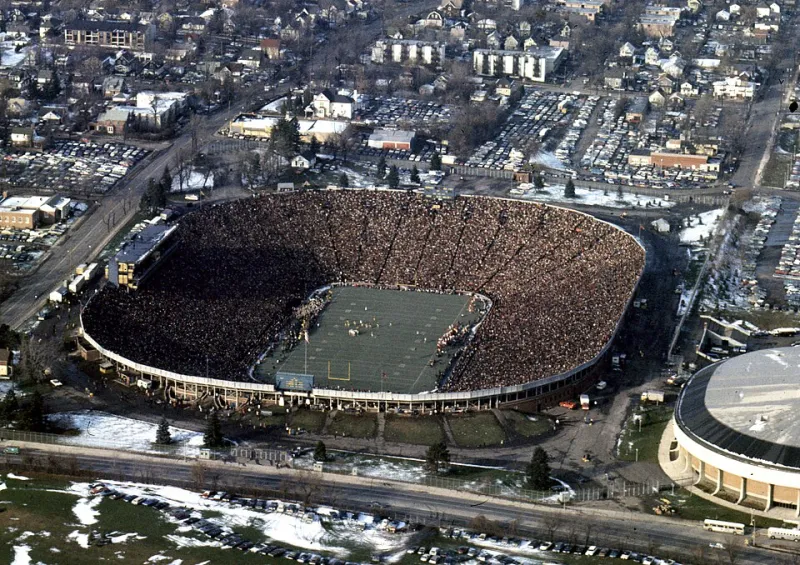
Photo: University of Michigan. News and Information Services., CC BY 4.0, via Wikimedia Commons
Injury reports get more coverage than the actual games. ESPN runs a ticker for a backup guard's hamstring. Books post prop lines within minutes of a practice report.
Weather? Crickets.
Totals on outdoor NFL and MLB games routinely sit untouched for hours — sometimes days — after the forecast has already turned. If you've got a weather app and ten spare minutes, you've got an edge that most of your betting group is leaving on the table.
Why the Market Is Slow on Weather (and Fast on Everything Else)
Sportsbooks price injuries instantly because there's a paper trail — an official report, a beat writer tweet, a status downgrade. Weather is fuzzier. A 70% chance of rain Tuesday doesn't guarantee a monsoon Sunday, so oddsmakers hesitate to shade a total on a forecast that might evaporate.
The result: the line lags behind the sky.
The catch-up usually happens fast. Once a national outlet flags the wind or the radar lights up on game day, the total can drop two or three points in under an hour. By kickoff, the value is gone. Your window is the quiet stretch between the first serious forecast and the market panic — usually 24 to 48 hours before first pitch or kickoff.
Wind: The Total-Killer Nobody Bets Early
Wind is the single most underpriced weather factor in American sports betting.
- Sustained winds over 15 mph in an NFL game historically drag scoring down meaningfully — deep balls get sails, kickers lose confidence past 40 yards, and coaches lean on the run.
- Gusts over 20 mph are where totals really crater. Think of those ugly December games in Chicago, Cleveland, or Green Bay where the over was dead by halftime.
Here's the play: pull up the forecast at a stadium like Soldier Field or MetLife on a Wednesday. If you see sustained 18 mph winds for Sunday and the total is still sitting at its fair-weather number, you've likely got a point or two of free value on the under before the book blinks.
The Dome Wildcard: When Weather Creates a Home-Field Switch
Every so often, a storm system forces a game into a dome that wasn't scheduled to be there — a hurricane bumping a Tampa game indoors, or a late-season relocation. When that happens, a cold-weather, run-the-ball, under-friendly script flips into a climate-controlled track meet.
Books adjust, but not always immediately, and public money often piles onto the under out of pure habit. If a game gets moved into a dome and the total hasn't jumped yet, the over is frequently the fastest-triggering angle on the board.
Baseball: Where a Little Rain Equals a Lot of Under
MLB is the softest weather market of all, mostly because casual bettors ignore it entirely.
- Heavy air and humidity let the ball travel — think summer nights in Atlanta or Texas. Lighter, cooler air kills fly balls.
- Rain delays gut starting pitchers. A starter yanked after two innings means five innings of middle relief, and middle relievers give up runs.
- Windy nights at hitter-friendly parks (Wrigley being the classic) can swing a total by a full run before a single bet is placed.
The 2015 story of a pair of bettors who built a weather-modeling operation and quietly hammered MLB unders is betting folklore at this point — not because the math was complicated, but because almost nobody else bothered to look up.
Your 10-Minute Weather Routine
Make this a habit every Wednesday and Saturday:
- Scan the slate for outdoor stadiums. Skip domes — that's the point.
- Check sustained wind, not the rain icon. Wind moves totals; a 40% rain chance mostly moves kick times.
- Compare the forecast to the current total. Ugly forecast plus a neutral line equals a bet.
- Bet early, not perfectly. The line will only get worse as the market wakes up.
One Warning Before You Go Full Meteorologist
Weather betting is an edge, not a lock. Forecasts flip, winds die down by kickoff, and books aren't asleep forever — they're just slower than the sky. Treat it as one input among several, size your bets like a normal human, and remember that a 2-point edge on a total is a great Tuesday, not a retirement plan.
The injury report is public property. The forecast is sitting in your pocket. Use both, and you're already ahead of the guy betting the over because he "likes the offense."
Bet smart, check the wind, and see you at the window.