Twenty Bucks, Full Saturday: Stretching a Micro-Bankroll Across an Entire Slate

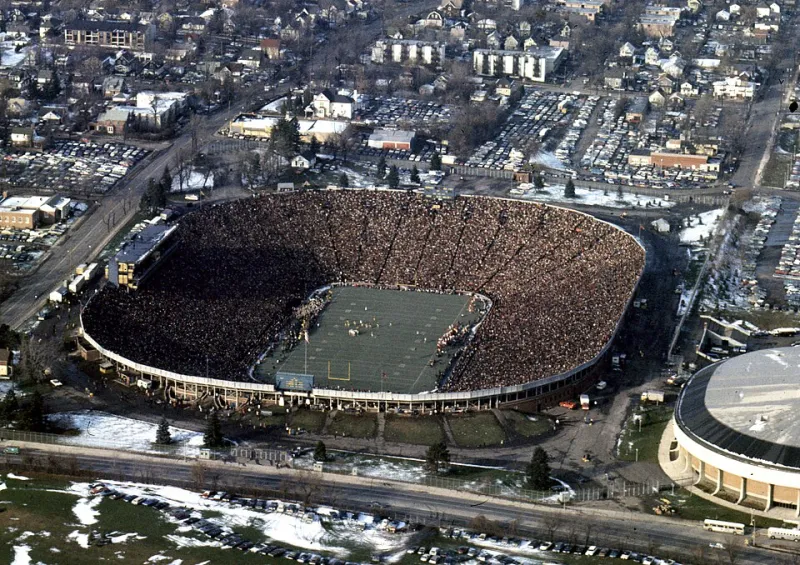
Photo: Mr. Rossi, CC BY-SA 4.0, via Wikimedia Commons
Let's kill the myth right away: you don't need a thousand-dollar bankroll to bet like a grown-up. What you need is twenty bucks and the discipline to treat those twenty bucks like they matter. Because here's the dirty secret the high-rollers won't tell you — the guy betting $2 units with a plan has way more fun on a Saturday than the guy dropping $100 on one parlay and staring at his phone for four hours.
This is the micro-bankroll playbook. Small stakes, full slate, zero chasing.
Your $20 Is Not Twenty $1 Bets
The first mistake tiny-bankroll bettors make is thinking small money means small thinking. They fire $5 straight bets, lose two, panic, and suddenly the whole roll is gone before the 3:30 window even kicks off.
Instead, break your $20 into units of $1. That gives you twenty betting decisions. Twenty chances to be right, twenty shots at a win, and — more importantly — twenty opportunities to actually learn something about how you bet. A unit that small keeps every loss a bruise instead of a knockout.
Yeah, $1 bets won't buy you a boat. That's not the point. The point is that a $20 roll with $1 units survives a bad afternoon. A $20 roll with $5 bets doesn't survive one bad half.
Build the Slate Like a Menu, Not a Buffet
Here's how a smart $20 Saturday might shake out:
- $2–3 on one best-bet side. Your strongest opinion of the day. This is your "main event" — the game you actually watched film (or at least Twitter) for.
- $1–2 on two or three supporting plays. Spots you like but don't love. Maybe a total, maybe a live-bet angle at halftime.
- $2 on one fun swing. A small-money longshot or a three-leg parlay at plus odds. This is your lottery ticket, and it's capped on purpose.
- The remaining $10–12 stays in your pocket. Untouched. That's not cowardice — that's ammunition for next week, or live bets when a number you actually like shows up in-game.
Notice what's missing: five parlays, a same-game monster, and a desperate $10 hedge at 9:47 PM. That stuff is how twenty dollars becomes zero dollars by dinner.
The Bet Types That Eat Small Bankrolls Alive
Some bets are bankroll shredders no matter what you've got, but they hit $20 players hardest:
- Four-plus leg parlays. The math doesn't care about your confidence. Every extra leg is another door for the whole ticket to die behind.
- Big teasers. They feel safe because you're getting points, but you're paying a premium to need every leg to land.
- Props you haven't researched. A $1 dart at a random anytime scorer is fine. Five of them is a donation.
- Live bets made out of boredom. The in-game menu is designed to bait impulsive clicks. If you wouldn't have bet it pregame, don't talk yourself into it mid-game.
The rule of thumb: with a micro-roll, every bet should either be your best read, a cheap lottery ticket, or nothing.
Make Twenty Dollars Feel Like a Thousand
Here's the part nobody talks about — the experience side. Betting $1 a game still gives you a horse in every race. You've got a reason to check scores, a reason to sweat the fourth quarter, a reason to care about that random Big Ten afternoon game. That's the entertainment product, and you got the full version for the price of a pizza.
Two habits make it feel even more legit:
- Track everything. A notes app works fine. Write down every bet, the closing line, and the result. After a month you'll actually know which bet types you're good at — most casual bettors never learn this about themselves.
- Grade yourself on process, not profit. A $1 loss on a well-reasoned bet is a win for your long game. A $3 win on a coin-flip prop is a lesson dressed up as a payout.
The One Rule That Keeps the Whole Thing Alive
When the roll dips — and it will — the urge is to bump your bet size to "get it back." That's the exact move that separates the bettors who last from the ones who reload their accounts every Friday.
Micro-bankroll rule number one: your unit size never changes mid-session. Bad Saturday? Next Saturday starts fresh with the same $1 units. It's boring. Boring is what bankrolls are made of.
Twenty dollars won't make you rich, but it can buy you an entire day of real action, real decisions, and real reps — the same reps the big-bankroll guys are getting, just at a price that stings a lot less. Bet small, bet often, bet smart. That's the whole game.